FOOST LIFTER VS NIKE ROMALEOS 4 VS ADIPOWER: THE 2025 COMPARISON
The definitive, data-backed guide to choosing your next weightlifting shoe. We analyzed heel height, durability, and biomechanics to help you lift heavier this year.

The definitive, data-backed guide to choosing your next weightlifting shoe. We analyzed heel height, durability, and biomechanics to help you lift heavier this year.
$185
The “Cheat Code” for Squats.
$200+
Standard for narrow feet.
$220+
Lightweight & agile.
Swipe left on mobile to see full data.
| Feature | FOOST LIFTER | ROMALEOS 4 | ADIPOWER III |
|---|---|---|---|
| Effective Heel Height | 27.0 mm (Highest) | 20.0 mm | 22.0 mm |
| Fit Width | Wide | Narrow | Snug |
| Toe Box | Anatomical Splay | Compressive | Athletic |
| Stability System | C-Frame (Anti-Valgus) | Rigid Plate | TPU Cage |
| Price | $185 (Best Value) | $200 – $230 | $220 – $250 |

Most weightlifting shoes offer a 20mm or 22mm heel. FOOST pushes the boundaries with 27mm. Why does this 7mm difference matter?
The #1 reason athletes return weightlifting shoes is width. The major brands (Nike/Adidas) build shoes on narrow lasts, often forcing athletes to size up, which compromises stability.
We designed the LIFTER with an anatomical toe box.
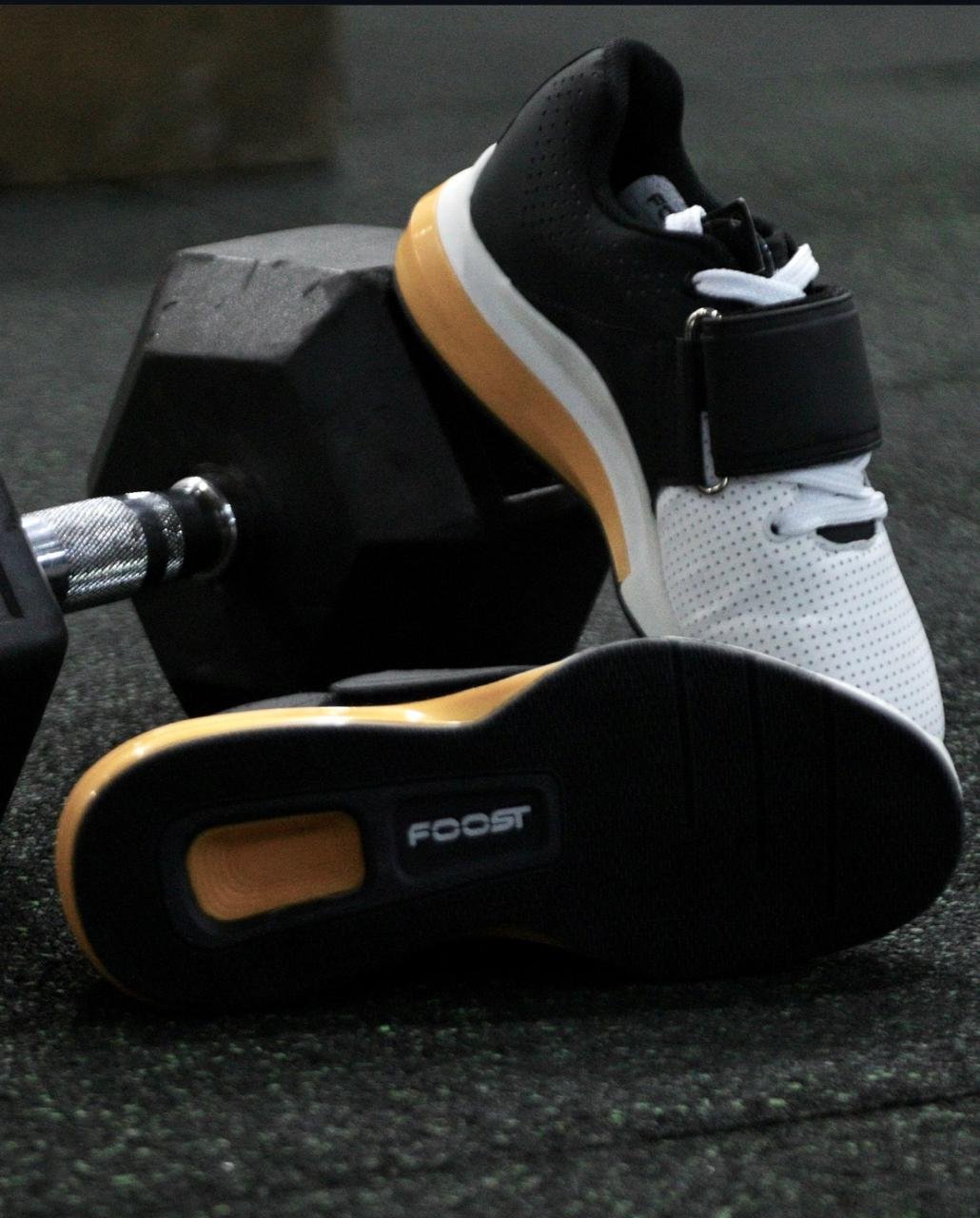
We analyzed wear-and-tear patterns over 12 months of heavy usage (5x/week). Here is the truth about longevity.
Should you wear these shoes for everything? Definitely not. Here is the professional breakdown:
RATING: 10/10 (Essential).
This is what they are made for. The 27mm heel (Foost) or 20mm (Nike) allows you to hit depth without rounding your back (butt wink). It isolates the quads and protects the lower back.
RATING: 10/10 (Essential).
The hard sole ensures 100% force transfer. When you stomp the ground, you don’t want a spongy sole absorbing your energy. Stability in the receiving position is non-negotiable.
RATING: 5/10 (Not Recommended).
Raising your heel increases the distance the bar must travel and shifts weight forward (quad dominant), making the lift harder. Stick to flat shoes (like our Trainer) or socks for deadlifts.
RATING: 5/10 (Situational).
If the WOD is heavy on thrusters or pistols? Yes. If it has running or high-rep box jumps? No. The heavy heel makes shoes like Romaleos or Foost Lifters feel clunky for cardio.

Don’t follow the hype. Follow your anatomy and training style.
If you struggle to hit parallel or your heels lift off the ground, FOOST (27mm) is your only real choice. The extra height is a mechanical fix for ankle limitations that other shoes can’t match.
If Nike Metcons usually feel tight on you, the Romaleos will hurt. Go with FOOST (anatomical toe box) or Tyr. Comfort is the first requirement for performance.
If you have perfect mobility and narrow feet, and you want the shoe used by many Olympic gold medalists, the Romaleos 4 is a safe, proven investment (albeit more expensive).
No more than using a weightlifting belt makes your core weak. It is a tool to maximize mechanical advantage. By allowing you to squat deeper with better posture, you actually train your legs through a fuller range of motion (ROM), leading to greater hypertrophy and strength gains over time.
Short answer: No. Weightlifting shoes like the Foost Lifter or Romaleos consist of a rigid, non-compressible plastic/wood heel. Running in them will feel like running in ski boots—it’s bad for your shins and ruins the shoe’s heel integrity. For running + lifting, look for a ‘Cross-trainer’ shoe.
Often, yes. Lower back pain in squats is frequently caused by ‘butt wink’ (lumbar flexion) due to poor ankle mobility. By elevating the heel (27mm in Foost), you can maintain a more upright torso, significantly reducing shear force on the lumbar spine.
Because of our wider anatomical toe box, 90% of our customers wear the same size as their regular training shoe. You can check our size chart on the product page.
Don’t let ankle mobility hold back your PRs. Experience the stability of the 27mm heel.